

Guides
Property Insurance Claims in Spain: the Consorcio, DANA Payouts and How to Claim After Damage (2026)
Making a property insurance claim in Spain: the seven-day rule, Consorcio extraordinary events cover, DANA payouts and the DGSFP complaint route.
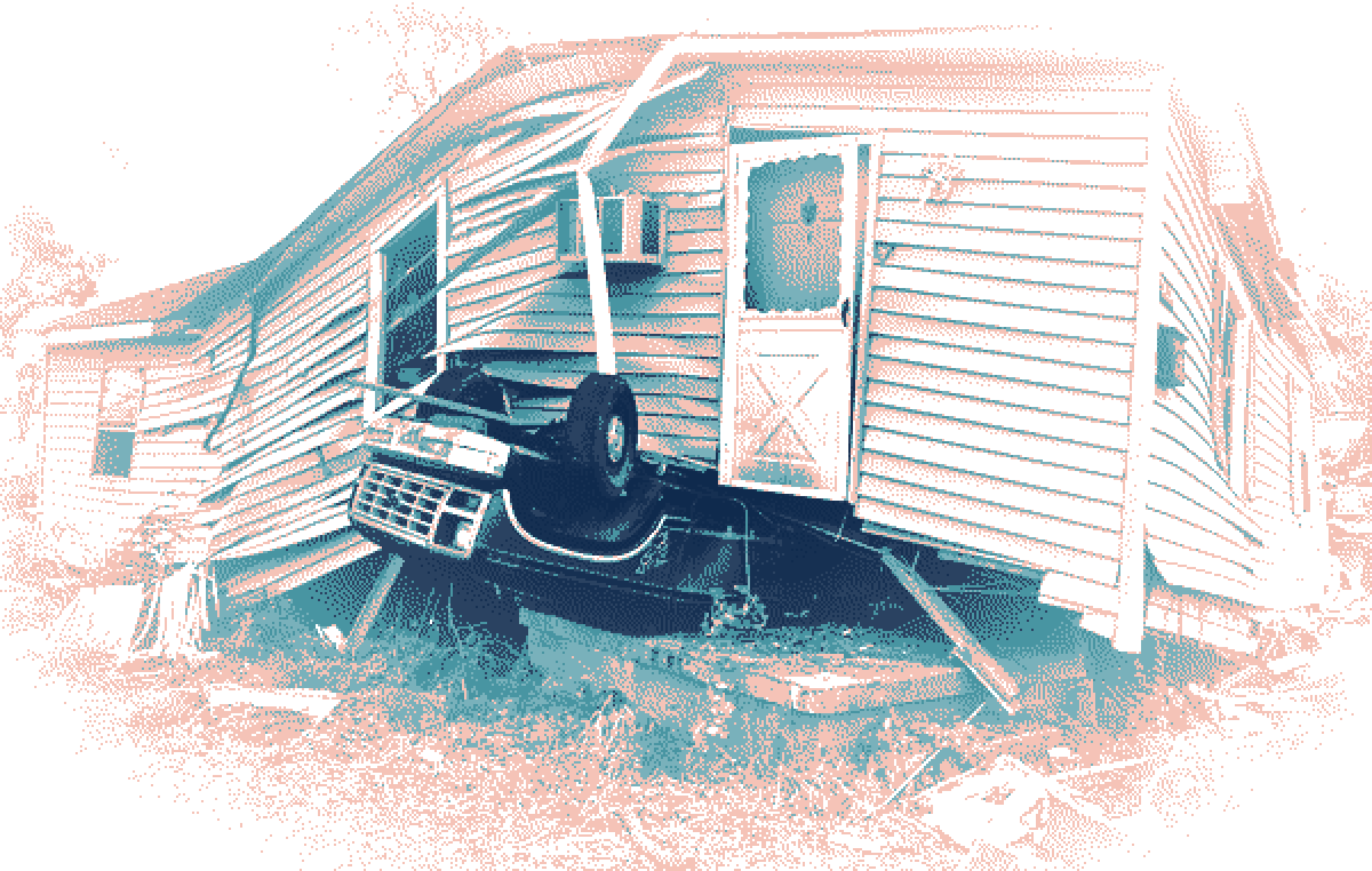
Photo by John Middelkoop on Unsplash
Making a property insurance claim in Spain follows a statutory framework that most non-resident owners never read until water is coming through the ceiling. The process is governed by Ley 50/1980, the Spanish insurance contract law, which fixes your notification deadline, the insurer’s payment window, and the penalty interest rate for late payment. Extraordinary events (floods, storms, terrorism) fall to a state-backed body, the Consorcio de Compensacion de Seguros, which indemnifies through a mandatory surcharge already baked into your premium. The October 2024 DANA floods, the largest extraordinary event in the Consorcio’s history, have stress-tested every part of this system. If your insurer denies or stalls a claim, the DGSFP provides a formal complaint route. Here is how the whole chain works.
How long do you have to notify a property insurance claim in Spain?
Article 16 of Ley 50/1980 requires the policyholder, insured or beneficiary to communicate the loss to the insurer within a maximum of seven days of becoming aware of it, unless the policy sets a longer period. Missing this deadline lets the insurer claim damages caused by the delay, but the insurer cannot escape liability if it learned of the loss through another channel. In practice, most multirriesgo home policies allow longer notification windows, but the statutory seven-day floor is the backstop. For non-resident owners who may not discover damage for weeks after a storm, the clock starts from the moment of discovery, not the event date.
You must also provide the insurer with all available information on the circumstances and consequences of the loss. Under Article 17, you are obliged to use reasonable means to mitigate the damage, and the insurer must reimburse mitigation costs even if the efforts produced no result.
What does the Consorcio de Compensacion de Seguros cover?
The Consorcio de Compensacion de Seguros (CCS) is a public business entity attached to the Ministry of Economy, Commerce and Enterprise through the DGSFP. It indemnifies losses from extraordinary events defined in Article 1 of RD 300/2004, the Reglamento del seguro de riesgos extraordinarios. No separate policy is needed: the coverage is funded by a mandatory surcharge on qualifying property, fire, theft, glass, machinery, electronics or combined policies (multirriesgo de hogar, de comunidades, de comercio).
The extraordinary events the CCS covers fall into three categories:
| Event type | Covered by CCS | Covered by your private insurer |
|---|---|---|
| Extraordinary flood (river overflow, coastal sea surge, snowmelt) | Yes | No |
| Earthquake or tsunami | Yes | No |
| Volcanic eruption | Yes | No |
| Atypical cyclonic storm (tropical cyclone >96 km/h, cold storm >84 km/h, tornado, extraordinary wind gusts >120 km/h) | Yes (when thresholds met) | Wind below thresholds, per policy |
| Terrorism, rebellion, sedition, mutiny, tumult | Yes | No |
| Acts of armed forces or security forces in peacetime | Yes | No |
| Ordinary rain, burst domestic pipe, kitchen fire, theft | No | Yes |
| Falls of celestial bodies and aerolites | Yes | No |
A critical distinction from Article 2 of the regulation: the CCS definition of extraordinary flood includes coastal sea surges (embates de mar) but excludes flooding from man-made channels, sewers or dams breaking unless the rupture itself was caused by an extraordinary event. Rain falling directly on your roof or collected by your drainage system is ordinary weather, not an extraordinary flood, and falls to your private insurer.
For wind damage specifically, the system splits responsibility. Your private insurer covers wind damage above the speed threshold in your policy (typically 80 to 100 km/h). The CCS covers wind damage when it qualifies as an extraordinary wind event, meaning gusts exceed 120 km/h, or when it forms part of a tropical cyclone above 96 km/h with heavy precipitation, or a cold storm above 84 km/h with sub-zero temperatures, or a tornado. To avoid leaving the insured in limbo while meteorological reports are compiled, the CCS and private insurers have agreed that wind claims route to the private insurer first, which then seeks reimbursement from the CCS for municipalities on the confirmed over-120 km/h list.
What has the DANA of October 2024 revealed about the Consorcio?
The DANA (depresion aislada en niveles altos) that struck eastern and southern Spain from 26 October to 4 November 2024 became the largest extraordinary event the Consorcio has ever managed. The floods killed 230 people in the province of Valencia alone and triggered the biggest single claims operation in the body’s history. The scale and speed of the response illustrate how the extraordinary-risks system works under extreme pressure.
By 25 November 2025, the Consorcio had registered 250,946 indemnification claims and paid 210,106 of them, totalling EUR 4,004,601,352, according to the Spanish government’s press service. By 27 March 2026, a parliamentary response from the Government reported 251,549 registered claims (352 received in 2026 alone), of which 212,237 had been paid for EUR 4,378,657,847. A further 36,903 claims were denied for duplicity or lack of coverage, and 4,276 remained in valuation. The Consorcio estimates the total cost at approximately EUR 4,800 million.
| Risk class | Claims paid (25 Nov 2025) | Amount paid (EUR) |
|---|---|---|
| Dwellings and communities | 61,524 | 1,073,682,877 |
| Vehicles | 131,385 | 1,188,191,335 |
| Commerce, warehouses and other | 12,537 | 934,035,906 |
| Offices | 806 | 36,989,035 |
| Industrial risks | 3,816 | 753,182,495 |
| Civil works | 38 | 18,519,704 |
The claims are concentrated in Valencia province (95.4 per cent), with the remainder spread across Castellon, Albacete, Tarragona, Barcelona, Murcia, the Balearics, Malaga, Cadiz and Huelva. The Consorcio mobilised more than 1,000 loss adjusters and processed 98.3 per cent of all property and loss-of-benefit claims within 13 months of the event. Of the 5,083 complaints filed against Consorcio decisions by March 2026, 4,972 were resolved with an average resolution time of 62 days, a complaint rate of 1.97 per cent.
How do you file a claim with the Consorcio?
The CCS accepts indemnification requests for extraordinary events through two channels: by phone at 900 222 665 (the call centre operates in English and French) or online through the CCS website. The request can be filed by the insured, the policyholder, their representatives, or through the insurer or broker who sold the policy. The CCS guidance states that the sooner the claim is filed, the faster the processing.
For property damage, the CCS needs the policy number, the insured goods, the date and location of the event, and a description of the damage. The CCS conducts its own valuation under Article 10 of RD 300/2004 and is not bound by valuations the private insurer may have made for ordinary-risk purposes. The CCS indemnifies on the same basis as your private policy: the same insured goods, the same sum insured, the same conditions (primer riesgo, indemnification limits, deductibles).
Article 8 of the regulation sets a seven-day carencia (waiting period) from policy issuance before CCS coverage takes effect, with exceptions for policy replacements without interruption, automatic revaluations, and cases where prior insurance was impossible because no insurable interest existed. There is no waiting period in personal (life/accident) insurance.
How does an ordinary claim differ from a Consorcio extraordinary claim?
The distinction between a standard insurer claim and a Consorcio extraordinary-event claim determines who pays, how fast, and under what procedural rules. The two paths share the same statutory payment deadlines and mora interest framework, but they diverge on notification channels, valuation, and whether a separate policy is needed. The table below maps them side by side.
| Feature | Ordinary claim (your insurer) | Consorcio extraordinary claim |
|---|---|---|
| Trigger | Any insured peril (fire, theft, burst pipe, ordinary wind) | Extraordinary event under RD 300/2004 (flood, earthquake, terrorism, atypical storm) |
| Who you notify | Your insurer or broker | Consorcio directly (phone 900 222 665 or online) or via your insurer |
| Notification deadline | 7 days from discovery (Article 16, may be extended by policy) | As soon as possible; CCS recommends immediate filing |
| Valuation | Insurer’s appointed loss adjuster | CCS’s own loss adjuster (Article 10, independent of insurer’s valuation) |
| Payment terms | 40-day minimum payment (Article 18); mora interest after 3 months (Article 20) | Same statutory terms apply; CCS is fully subject to Articles 18 and 20 as direct insurer |
| Separate policy needed? | Yes, your private policy | No, the surcharge is embedded in qualifying policies |
| Waiting period | Per policy terms | 7-day carencia from policy issuance (Article 8, with exceptions) |
| Complaint route | Insurer customer service, then DGSFP | CCS customer service, then DGSFP |
A practical consequence: if a storm produces both ordinary wind damage (below the 120 km/h threshold) and extraordinary flooding, the wind claim goes to your private insurer and the flood claim goes to the Consorcio. The two processes run in parallel but under different valuers and different procedural tracks.
Who pays: your individual policy, the community policy, or the Consorcio?
Non-resident owners in Spanish apartment blocks often hold two overlapping policies: an individual multirriesgo de hogar for contents and interior fixtures, and a community insurance policy (seguro de la comunidad) for the building structure and common areas. When damage occurs, the first question is which policy responds. Structural damage to the building fabric (roof, facade, shared pipes) typically falls to the community policy, while damage to interior finishes, furniture and personal belongings falls to the individual policy. For more on the community policy, see our guide to community insurance in Spain.
The CCS applies the same split. If both your individual policy and the community policy carry the extraordinary-risks surcharge (they do, by law), the CCS indemnifies each policy on its own terms. A flooded basement from an extraordinary river overflow would see the community policy cover the structural shell and the individual policy cover the contents, with the CCS handling both if the event qualifies as extraordinary.
For guidance on what to insure as a non-resident owner, see our property insurance for non-resident owners guide. If you rent out your property, rent default insurance covers a different risk category: tenant non-payment rather than physical damage. For new-build buyers, the seguro decenal covers structural defects for ten years under a separate statutory framework.
What happens if the insurer denies or delays your claim?
Spanish law gives you three escalating tools against a stalling insurer: the 40-day minimum payment rule, penalty mora interest for late settlement, and the DGSFP complaint route. Each is statutory, not contractual, and applies equally to private insurers and the Consorcio when it acts as a direct insurer.
The 40-day minimum payment rule. Article 18 of Ley 50/1980 requires the insurer to pay the minimum amount it acknowledges owing within 40 days of receiving the loss declaration, while it completes valuations for the balance. This means the insurer cannot freeze the entire payout while arguing about the final sum; it must release what it concedes.
Mora interest. Article 20 imposes penalty interest if the insurer has not fulfilled its obligation within three months of the loss. The interest rate is the legal rate of interest plus 50 per cent, calculated daily. After two years from the loss date, the annual interest cannot fall below 20 per cent. The CCS, when acting as a direct insurer, is fully subject to this rule. When the CCS acts as a guarantee fund (for example, when your insurer is in liquidation), mora only applies after three months from the date you claimed against it.
The DGSFP complaint route. Regulated by Orden ECC/2502/2012, the DGSFP’s Servicio de Reclamaciones handles complaints against insurers, pension fund managers and insurance mediators. The procedure is mandatory in sequence: you must first file with the insurer’s own customer service department or its appointed ombudsman. Only if you receive an unsatisfactory response, or no response within one month, can you escalate to the DGSFP. The DGSFP now accepts complaints electronically through its sede electronica at sededgsfp.gob.es, in addition to the paper route at Paseo de la Castellana 44, 28046 Madrid. The DGSFP’s rulings are not binding on the insurer but carry supervisory weight and are published in aggregate, giving insurers a reputational incentive to resolve complaints. For legal costs not covered by your home policy, legal protection insurance may fund the litigation separately.
The DANA claims operation demonstrated the complaint route in action. Of the 5,083 complaints filed against the Consorcio’s DANA decisions by March 2026, 4,972 were resolved, with an average resolution time of 62 days and a complaint rate of 1.97 per cent across all registered claims.
What documents do you need for a Spanish property insurance claim?
A complete claim file speeds every stage of the process, from notification to valuation to final settlement. Missing documentation is the most common cause of delayed payouts, particularly for non-resident owners who rely on a property manager to gather evidence remotely. Gather the following before contacting your insurer or the Consorcio:
- The policy number and a copy of the schedule of cover
- Photographs of the damage taken before any clearing or repair
- A dated written description of what happened and when
- Repair estimates from at least two independent contractors
- Receipts for emergency mitigation work (Article 17 costs are reimbursable)
- For extraordinary events, the CCS online form or phone reference number
- For theft, a police denuncia (formal complaint) filed with the Guardia Civil or Policia Nacional
- For community-policy claims, the comunidad’s agreement or administrator’s report
For broader buying-stage mistakes that create insurance gaps (under-insuring contents, skipping community cover, ignoring the seguro decenal), see our common mistakes when buying property in Spain guide. To protect an empty property against unauthorised occupation while a claim is processed, our okupas prevention guide covers the practical steps.
This guide is general information, not legal or tax advice. Rules change and individual circumstances differ. Verify current requirements with an independent lawyer (abogado) or tax advisor (gestor/asesor fiscal) before acting.
The Listyco Letter
Get the quarterly market report when it lands.
New listings, editorial pieces and our quarterly market data, delivered Sundays.
Frequently asked questions
- How long do I have to report a property insurance claim in Spain?
- Article 16 of Ley 50/1980 sets a maximum of seven days from the moment you become aware of the damage. Your policy may fix a longer period, but the statutory floor is seven days. Failing to meet this deadline lets the insurer claim damages caused by the delay, though the insurer cannot escape liability if it learned of the loss through another channel.
- What does the Consorcio de Compensacion de Seguros cover?
- The Consorcio indemnifies extraordinary events defined in RD 300/2004 Article 1: earthquakes and tsunamis, extraordinary floods (including coastal sea surges), volcanic eruptions, atypical cyclonic storms (tropical cyclones with wind above 96 km/h, cold storms above 84 km/h, tornadoes, or extraordinary winds with gusts above 120 km/h), terrorism, rebellion, sedition, mutiny, tumult, and acts of the armed forces or security forces in peacetime. Ordinary rain, a burst domestic pipe, or a kitchen fire falls to your private insurer, not the Consorcio.
- How much has the Consorcio paid for the October 2024 DANA floods?
- By 27 March 2026, the Consorcio had registered 251,549 indemnification claims for the DANA floods of October 2024 and paid 212,237 of them, totalling EUR 4,378,657,847. A further 36,903 claims were denied for duplicity or lack of coverage. The Consorcio estimates the total cost at approximately EUR 4,800 million, making it the largest extraordinary event in its history.
- Do I need a separate policy for Consorcio coverage?
- No. The extraordinary-risks surcharge is built into every qualifying property, fire, theft, glass, machinery, electronics or combined multirriesgo policy sold in Spain. If you hold a valid home or community insurance policy and the premium is paid up, you are already covered. The Consorcio indemnifies on the same terms and sums insured as your private policy.
- What can I do if my Spanish insurer rejects my claim?
- File a written complaint with the insurer's customer service department or its appointed ombudsman first. If you receive no satisfactory response within one month, escalate to the DGSFP (Direccion General de Seguros y Fondos de Pensiones) through its electronic sede at sededgsfp.gob.es or on paper at Paseo de la Castellana 44, Madrid, under Orden ECC/2502/2012.
- How quickly must a Spanish insurer pay after I file a claim?
- Under Article 18 of Ley 50/1980, the insurer must pay the minimum amount it acknowledges owing within 40 days of receiving your claim declaration, while it completes investigations and valuations for the balance. If no payment is made within three months of the loss, Article 20 imposes mora interest at the legal rate plus 50 percent, rising to a floor of 20 percent per year after two years.
Sources and data
- Ley 50/1980, de 8 de octubre, de Contrato de Seguro · Agencia Estatal Boletin Oficial del Estado
- Real Decreto 300/2004, Reglamento del seguro de riesgos extraordinarios · Agencia Estatal Boletin Oficial del Estado
- Guia rapida de solicitud de indemnizacion de riesgos extraordinarios · Consorcio de Compensacion de Seguros
- Informacion sobre el procedimiento de reclamaciones · Direccion General de Seguros y Fondos de Pensiones
- Presentacion de quejas y reclamaciones · Direccion General de Seguros y Fondos de Pensiones
- El Consorcio de Compensacion de Seguros supera los 4.000 millones en pagos por indemnizaciones a afectados por la DANA · La Moncloa
- Acerca del CCS · Consorcio de Compensacion de Seguros
- Memorias e informes · Consorcio de Compensacion de Seguros

Guides
The Certificate of Non-Residence in Spain: How to Prove You Are Not a Spanish Tax Resident
How to prove non-resident tax status in Spain: the AEAT negative certification, foreign residence certificates and where property owners need them in 2026.

Guides
Lease assignment (cesion de contrato) in Spain: LAU Article 8 consent rules, subarriendo vs cesion and what happens when a tenant transfers a lease
A cesion de contrato in Spain transfers an entire lease to a new tenant under LAU Article 8, requiring written landlord consent. Here is how it works.

Guides
Multi-currency mortgages in Spain: the multidivisa risk, Article 20 of Ley 5/2019 and why currency swings can wipe out your equity
Multi-currency mortgages in Spain: the multidivisa, Article 20 of Ley 5/2019, the 20 per cent swing trigger, the conversion right and STS 608/2017 nullity.