

Guides
Buying Repossessed Property in Spain: Bank Stock, Sareb and the REO Purchase Process (2026 refresh)
Repossessed property in Spain in 2026: the Sareb wind-down to CASA47, the bank REO purchase process, discounts, cuerpo cierto risks and due diligence.
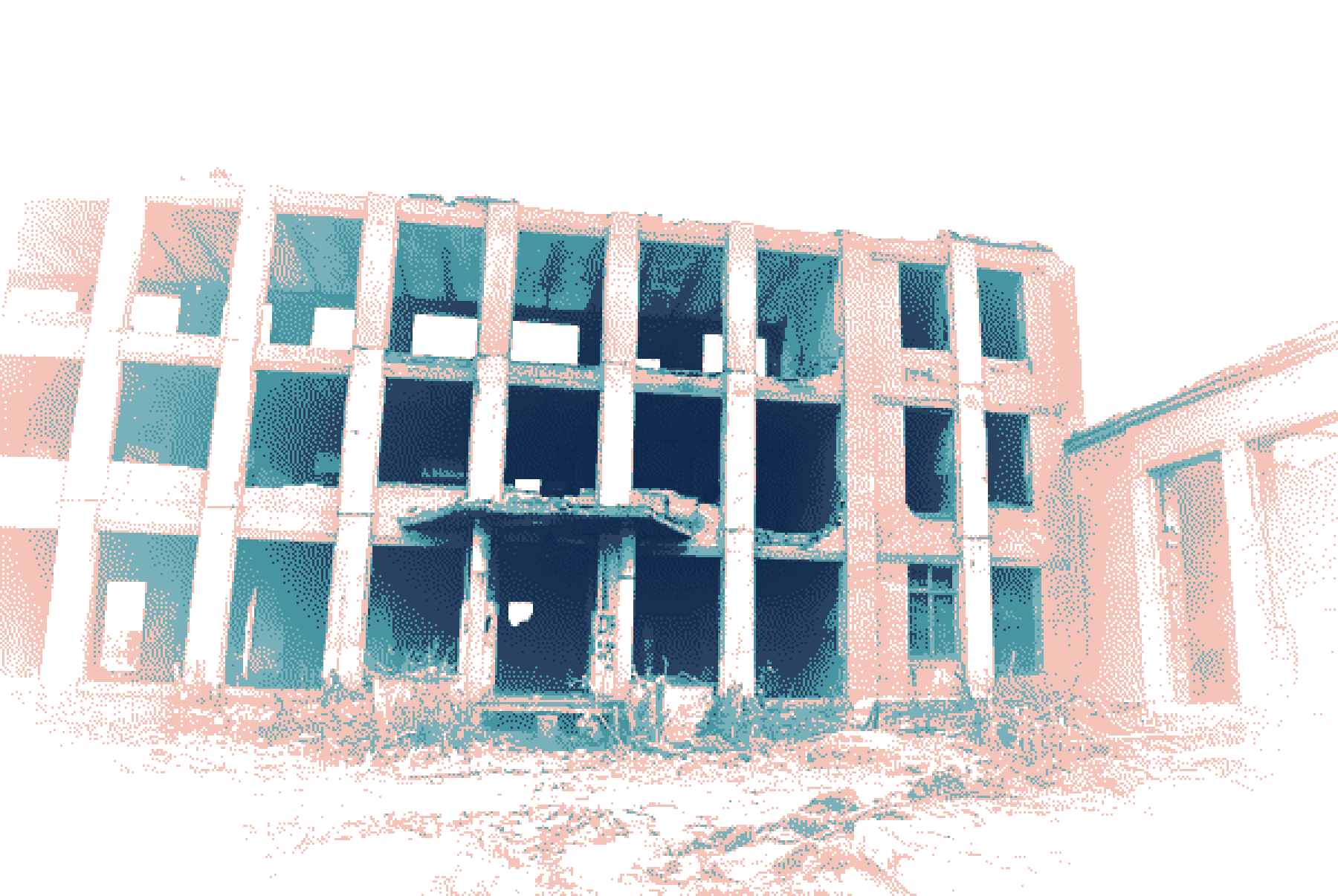
Photo by Bermix Studio on Unsplash
Repossessed property in Spain is a distinct buying channel, not a cheaper version of the standard resale. The stock comes from banks that took properties back after mortgage default, and from Sareb, the state-backed company set up in 2012 to absorb impaired assets from rescued savings banks. The headline discount is real: bank REO properties typically list 20 to 40 percent below comparable open-market resales. But the buyer takes the property cuerpo cierto, meaning as-is, and the bank accepts no liability for hidden defects, outstanding debts, or encumbrances it failed to disclose. In a market that set a record 714,237 registered home sales in 2025 (INE), but where April 2026 transactions fell 1.8 percent year on year to 53,241, the cycle is cooling. With Sareb now winding down and transferring its housing to the state entity CASA47, repossessed stock is a shrinking, not growing, channel.
What is Sareb and why does it matter for repossessed property in Spain?
Sareb, the Sociedad de Gestion de Activos Procedentes de la Reestructuracion Bancaria, is Spain’s “bad bank”: a state-backed asset management company created under Article 35 of Ley 9/2012, de 14 de noviembre, de reestructuracion y resolucion de entidades de credito (BOE-A-2012-14062). During 2012 and 2013, Sareb received impaired assets from the successor institutions of rescued savings banks, acquired through the issuance of state-guaranteed bonds. Its mandate is to manage and liquidate that portfolio, repaying the debt it acquired at inception.
Sareb approved its 2024 annual accounts in July 2025, reporting revenue of EUR 3,060 million (up 11 percent on 2023) and a further EUR 1,230.3 million in debt repayment. As of that date, Sareb has repaid over 44 percent of the senior debt issued in 2012. Consumer housing sales reached 8,900 units in 2024 before being halted by the General Shareholders’ Meeting on 20 March 2025. The company posted a net loss of EUR 2,826 million in 2024, reflecting the transfer cost of assets inherited in 2012.
The landscape shifted decisively in 2025. In January, Sareb paused residential sales to identify properties for transfer to SEPES (now CASA47), the new state-owned housing company. The Council of Ministers later agreed to transfer over 40,000 homes and approximately 2,400 plots of land to CASA47, with a combined market value of EUR 5,900 million and capacity for an additional 55,000 homes on the transferred land. The government allocated a further EUR 593 million for CASA47 to refurbish the housing, develop the land, and acquire additional properties. Sareb’s mandate expires in November 2027, when it enters formal liquidation. The practical implication for a buyer is that the direct Sareb pipeline is narrowing, and the remaining bank REO stock is increasingly held by commercial banks’ own real estate subsidiaries.
How does buying a bank repossessed property differ from a standard resale?
The purchase mechanics are the same (nota simple, arras, notary, registry), but the counterparty and the risk allocation are different. On a standard resale, the seller is a private individual who warrants the property’s condition under general Spanish contract law. On a bank REO purchase, the seller is the bank (or its real estate subsidiary), and the property is sold cuerpo cierto. The bank treats the property as a balance-sheet asset, not a residential product, and it does not have detailed knowledge of the legal or physical condition of what it is selling.
The buyer’s due diligence must therefore be stricter, not lighter. The standard pack from the complete buying process applies in full, with three additional checks specific to REO: confirm the bank has cleared all prior charges (the defaulted owner’s mortgage, any secondary liens) from the Registro de la Propiedad before signing; verify there are no unpaid community fees the buyer would inherit under the Ley de Propiedad Horizontal; and inspect the property physically for occupation, because an occupied REO property is the most common post-purchase problem.
| Feature | Standard resale | Bank repossessed (REO) |
|---|---|---|
| Seller | Private individual | Bank or its REO subsidiary |
| Condition warranty | General contract law | Cuerpo cierto (as-is) |
| Discount vs market | None (market price) | Typically 20 to 40 percent below |
| Mortgage available | Open market | Often from the selling bank at preferential terms |
| Due diligence | Standard pack | Standard pack plus charge-clearance and occupation checks |
| Closing timeline | 8 to 12 weeks | Often faster (bank is a repeat seller) |
How much discount do bank repossessed properties actually offer?
There is no statutory discount on bank REO in Spain; the price is whatever the bank and buyer agree. In practice, banks price repossessed stock below comparable open-market resales to move it off the balance sheet. The typical range is 20 to 40 percent below the market value for the same post code and property type, though the deepest discounts apply to properties needing renovation, in secondary locations, or with legal complications such as encumbrances or occupation.
The right comparison is against the current market valuation for the same property, not against the original defaulted mortgage valuation, which may have been inflated at the top of the credit cycle. A buyer should ask the selling bank for its own tasacion (the appraisal it commissioned), compare it against recent notarial sale prices for the area, and discount for the condition and any legal baggage. The common mistakes guide covers the failure modes that apply to any Spanish purchase; on a REO acquisition, the condition and occupation checks carry extra weight because the bank will not warrant them.
What are the specific risks of buying repossessed property in Spain?
Five risks are specific to the REO channel and do not apply (or apply less) to a standard resale:
-
Cuerpo cierto. The bank sells the property as-is. Hidden defects, structural problems, and discrepancies between the registered and actual surface area are the buyer’s problem, not the bank’s.
-
Outstanding debts. While the bank is theoretically responsible for clearing prior charges, the buyer must personally verify everything with a nota simple before closing. Unpaid IBI, plusvalia municipal, and community fees can attach to the property and pass to the new owner under Spanish law.
-
Occupation. An occupied REO property is the most expensive post-purchase problem. If the former owner, a tenant, or an okupa (squatter) is in residence, the buyer inherits a civil or criminal eviction process that can take months.
-
No bank guarantee. Bank REO properties do not carry the Ley 57/1968 off-plan guarantee, because they are resales, not new construction. The buyer has no statutory recovery mechanism if a problem surfaces after completion.
-
Encumbrances. Some REO properties carry restrictive covenants, easements, or unresolved planning issues that the bank did not investigate when it took the property back. A full nota simple and, for Andalusian properties, an AFO check are essential.
Can you get a mortgage on a bank repossessed property?
Often yes, and sometimes on better terms than a standard resale. The selling bank has a structural incentive to finance its own REO stock, because a mortgage on the property keeps the asset off its balance sheet. Many Spanish banks offer preferential rates or reduced arrangement fees on their repossessed listings. The non-resident mortgage guide covers the standard borrowing framework: non-resident buyers can typically borrow 60 to 70 percent of the bank’s tasacion (appraisal value), and the bank’s appraisal may come in lower than the listing price on a deeply discounted REO property, which means the loan-to-value cap applies to the appraisal, not the purchase price.
The total acquisition cost stack is the same as on a standard purchase: ITP at 7 percent on resales in Andalusia (or IVA at 10 percent plus AJD at approximately 1.2 percent on new builds), plus notary, Land Registry, and an independent lawyer at roughly 1 to 1.5 percent plus VAT. The full stack runs approximately 12 to 15 percent on top of the price, and a buyer who sees a 30 percent discount and forgets the 12 to 15 percent cost overhead is still ahead, but by less than the headline number suggests.
What is the Sareb wind-down and how does it affect the 2026 buyer?
Sareb’s mandate expires on 28 November 2027, when it enters formal liquidation. The company’s 2024 accounts, approved in July 2025, confirmed revenue of EUR 3,060 million and debt repayment of EUR 1,230.3 million, bringing total senior debt repaid to over 44 percent. In 2025, the Council of Ministers agreed to transfer over 40,000 residential properties and approximately 2,400 plots of land to CASA47 (formerly SEPES), the state-owned housing company, for use as affordable and social rental stock. The transferred assets carry a combined market value of EUR 5,900 million, and the transferred land has capacity for an additional 55,000 homes. Sareb’s social housing programme now exceeds 11,500 homes, benefiting over 35,000 people.
For a 2026 buyer, this means three things. First, the direct Sareb pipeline is shrinking: the properties most suitable for social housing have already been or are being transferred to CASA47, and the remaining residential stock that reaches the open market is what CASA47 did not want. Second, commercial bank REO (stock held by Santander, BBVA, Sabadell and their real estate subsidiaries) is now the more active channel, listed through the banks’ own property portals. Third, the window is closing: by late 2027, Sareb will cease to be a market participant entirely, and the remaining commercial bank REO stock will be the only channel for buyers seeking distressed property in Spain.
How does the 2026 market context affect repossessed property buying?
Spain’s property market set a record in 2025, with 714,237 registered home sales, up 11.5 percent on 2024 (INE). But the latest data signals a shift. In April 2026, registered home sales fell to 53,241, down 1.8 percent year on year, and total property transfers dropped 13.1 percent month on month. This cooling matters for the REO buyer in two ways. First, a softening market can widen the discount on repossessed stock, because banks facing a slower resale market have a stronger incentive to clear balance-sheet assets. Second, a cooling market narrows the gap between REO and open-market pricing, because comparable resale prices are no longer rising at the 2025 pace. The buyer’s comparative analysis should use the most recent INE transaction data, not the annual 2025 average, to avoid overstating the discount.
For non-resident buyers, the mortgage foreclosure process and the missed payment timeline explain how properties end up as REO in the first place: understanding the default pathway helps a buyer assess the condition and legal history of the stock they are buying.
How does the non-resident tax rule apply to a bank REO purchase?
If the seller is a bank (a Spanish resident entity), the 3 percent non-resident retention under Modelo 211 does not apply, because the retention rule applies only when the seller is a non-resident. The buyer of a bank REO property pays ITP on the resale price, or IVA plus AJD if the property is classified as a new build for tax purposes. The non-resident CGT guide covers the 3 percent retention rule for the eventual resale, when the foreign buyer becomes the seller.
The key tax point on a REO purchase is the declared value. The Agencia Tributaria checks the declared price against its own reference values (valor de referencia de catastro), and a deeply discounted REO price that falls below the cadastral reference value can trigger a tax reassessment and a supplementary ITP demand. The buyer’s lawyer should verify the declared value against the Catastro reference before the notary signing.
This guide is general information, not legal or tax advice. Rules change and individual circumstances differ. Verify current requirements with an independent lawyer (abogado) or tax advisor (gestor/asesor fiscal) before acting.
The Listyco Letter
Get the quarterly market report when it lands.
New listings, editorial pieces and our quarterly market data, delivered Sundays.
Frequently asked questions
- What is Sareb and does it still sell repossessed property in Spain in 2026?
- Sareb (Sociedad de Gestion de Activos Procedentes de la Reestructuracion Bancaria) is the state-backed asset management company created in 2012 under Article 35 of Ley 9/2012 to absorb impaired assets from rescued banks. In January 2025 Sareb paused residential sales, and the Council of Ministers later agreed to transfer over 40,000 homes and approximately 2,400 plots to CASA47, the state-owned housing company, with a combined market value of EUR 5,900 million. Properties not selected for CASA47 transfer may still reach the market through Sareb's outsourced providers, but the direct residential pipeline is winding down ahead of the November 2027 liquidation deadline.
- How much below market price do bank repossessed properties sell for in Spain?
- There is no statutory discount. Bank REO properties in Spain typically list 20 to 40 percent below comparable open-market resales, because banks treat real estate as balance-sheet assets, not residential stock, and price to liquidate. The discount is largest on properties needing renovation, in secondary locations, or with legal complications such as encumbrances or occupation. A buyer should compare the listing against the notarial or Tasacion-informed market value for the same post code and property type, not against the original defaulted mortgage valuation.
- What does cuerpo cierto mean when buying a repossessed property in Spain?
- Cuerpo cierto is the Spanish legal term for buying a property as-is, accepting it in its current physical and legal condition. The bank sells cuerpo cierto and accepts no liability for hidden defects, physical condition, or discrepancies between the registered and actual surface area. This means the buyer's due diligence must be stricter, not lighter: a nota simple, a physical inspection, a debt certificate from the community of owners, and an IBI receipt are all essential before signing, because the bank will not warrant the property's condition.
- Can I get a mortgage on a bank repossessed property in Spain?
- Often yes, and sometimes on better terms than a standard resale. The selling bank frequently offers its own mortgage product on its repossessed stock, sometimes at preferential rates or with reduced arrangement fees, because financing the purchase keeps the asset off its balance sheet. Non-resident buyers should expect the same borrowing-capacity limits as on any Spanish property, typically 60 to 70 percent of the bank's tasacion (appraisal value), which may be lower than the listing price on a discounted REO property.
- What due diligence is essential on a bank repossessed property in Spain?
- The standard pack, plus extra checks: a nota simple from the Registro de la Propiedad for charges and embargoes, a certificado de deudas from the comunidad de propietarios for unpaid community fees the buyer inherits, an IBI receipt for outstanding local tax, a physical inspection for condition and occupation, and a check for any okupa (squatter) presence. The bank sells as-is, so the buyer's lawyer must verify that the bank has cleared all prior charges except those explicitly disclosed and agreed in the contract.
Sources and data
- Ley 9/2012, de 14 de noviembre, de reestructuracion y resolucion de entidades de credito (BOE-A-2012-14062) · BOE (Agencia Estatal Boletin Oficial del Estado)
- Sareb: the asset management company helping to strengthen the real estate and financial sector · Sareb
- Sareb approves annual accounts for 2024 · Sareb
- SAREB pauses residential sales to outline new strategic relationship with SEPES · Sareb
- Sareb: Our work · Sareb
- Statistics on Transfer of Property Rights (STPR). December 2025 and year 2025. Provisional data · INE (Instituto Nacional de Estadistica)
- Statistics on Transfer of Property Rights (STPR). April 2026. Provisional data · INE (Instituto Nacional de Estadistica)
- Modelo 211. IRNR. Retencion en la adquisicion de bienes inmuebles a no residentes · AEAT (Agencia Tributaria)

Guides
The Certificate of Non-Residence in Spain: How to Prove You Are Not a Spanish Tax Resident
How to prove non-resident tax status in Spain: the AEAT negative certification, foreign residence certificates and where property owners need them in 2026.

Guides
Lease assignment (cesion de contrato) in Spain: LAU Article 8 consent rules, subarriendo vs cesion and what happens when a tenant transfers a lease
A cesion de contrato in Spain transfers an entire lease to a new tenant under LAU Article 8, requiring written landlord consent. Here is how it works.

Guides
Multi-currency mortgages in Spain: the multidivisa risk, Article 20 of Ley 5/2019 and why currency swings can wipe out your equity
Multi-currency mortgages in Spain: the multidivisa, Article 20 of Ley 5/2019, the 20 per cent swing trigger, the conversion right and STS 608/2017 nullity.