

Guides
Property Boundary Disputes in Spain: Lindes, Amojonamiento and the Codigo Civil Boundary Rules (2026)
Property boundary disputes in Spain follow the Codigo Civil deslinde and amojonamiento rules. Here is how to resolve lindes with neighbours, step by step.
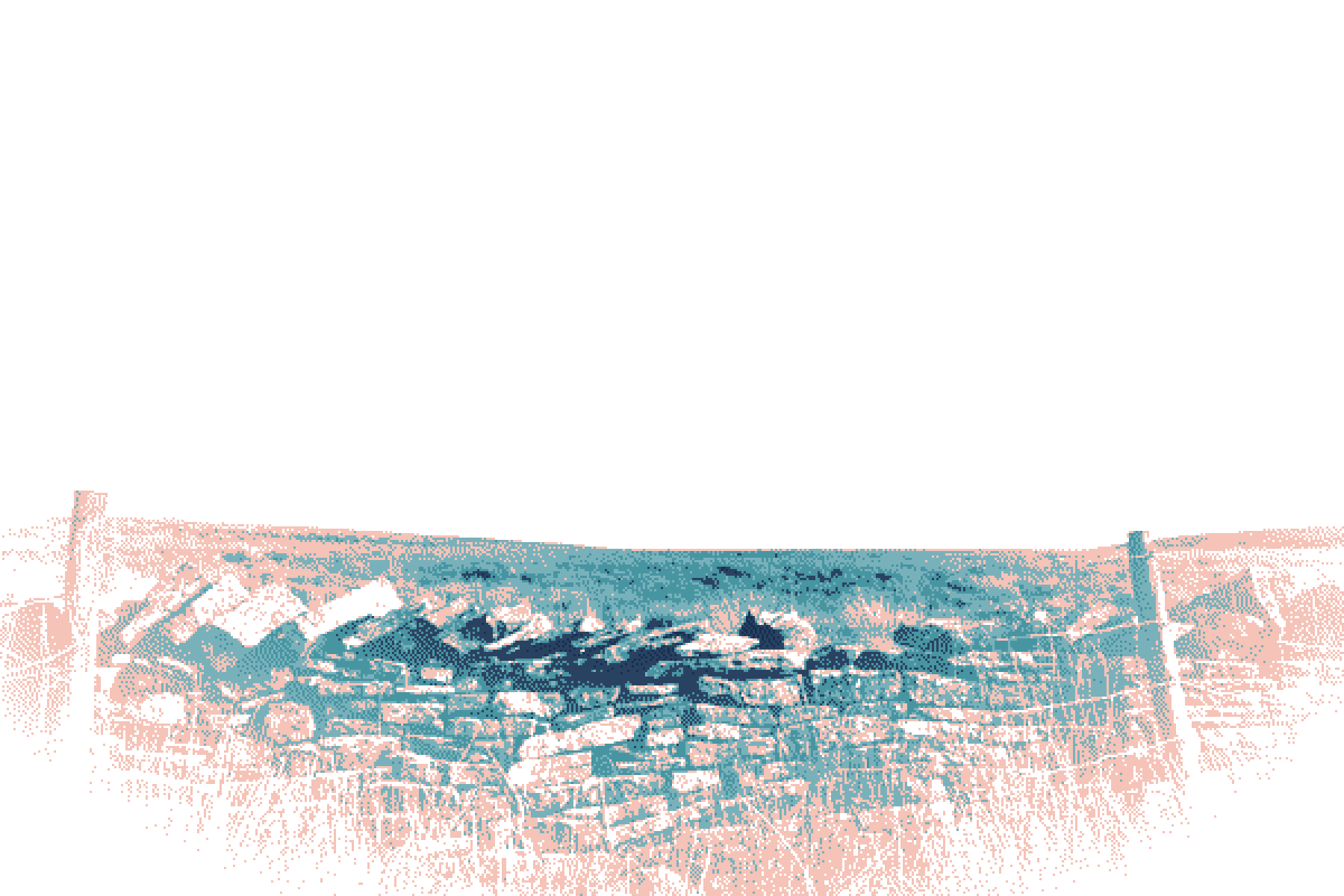
Photo by Andrew Hall on Unsplash
Property Boundary Disputes in Spain: Lindes, Amojonamiento and the Codigo Civil Boundary Rules (2026)
A boundary dispute in Spain, known as a conflicto de lindes, arises when two adjoining property owners disagree about where one finca ends and the other begins. The Codigo Civil gives every owner an imprescriptible right to demand a deslinde (boundary determination) and amojonamiento (physical marking) under Articles 384 to 387, while the Ley Hipotecaria, reformed by Ley 13/2015, offers a notarial route to resolve registered-property boundaries without litigation. Recent 2025 resolutions from the DGSJFP (formerly the DGRN) clarify how registrars must handle adjoining-owner opposition under the Article 199 georeferencing procedure, a development that directly affects any owner of rural land, a villa plot, or a finca on the Costa del Sol where boundaries may rely on outdated descriptions or physical features that have shifted over decades.
What does the Codigo Civil say about deslinde and amojonamiento?
Articles 384 to 387 of the Codigo Civil establish the right to deslinde and the rules for determining the boundary line. Article 384 grants every owner the right to deslindar their property with citation of the owners of adjoining fincas, and extends the same right to holders of real rights (such as easement holders). Article 385 requires that the deslinde be carried out in conformity with the title documents of each owner, and, where titles are insufficient, by the possession held by the adjoining owners. Article 386 provides that if neither titles nor possession resolve the matter, the contested terrain is divided in equal parts. Article 387 addresses the case where the titles of all colindantes collectively indicate a larger or smaller area than the total terrain actually comprises: the surplus or deficit is distributed proportionally among them.
Amojonamiento is the physical counterpart to deslinde. Once the boundary line is legally determined, it is marked with permanent physical markers called mojones or hitos (stone boundary posts, concrete markers, or metal pins). The Codigo Civil does not prescribe the exact material of the mojones, but the customary practice, confirmed by Spanish courts, is that the markers must be durable and identifiable. The cost of the amojonamiento is typically shared equally between the adjoining owners unless one party initiated the dispute without cause, in which case courts may allocate costs differently. A deslinde correctly documented has indefinite validity: there is no statutory expiry, though a new deslinde may be warranted if the physical circumstances that motivated the original are altered, for example by land movement, reconstruction, or the discovery of new title evidence.
For owners of rural plots on the Costa del Sol, the deslinde and amojonamiento procedure is particularly relevant because rustic land boundaries are often described in registry entries by general linderos (neighbouring features) rather than precise georeferenced coordinates, making disputes more likely than in urban apartment complexes.
Is the action for deslinde time-barred?
No. Article 1965 of the Codigo Civil expressly declares that the action for deslinde between owners of adjoining properties does not prescribe. This is one of a small number of actions that the Codigo Civil treats as imprescriptible, alongside the division of a thing held in common (Article 400) and certain hereditary partition actions.
The practical consequence is significant: a property owner can demand a boundary determination against a neighbour regardless of how many years or decades have passed since the boundary was last formally established. This differs from the ordinary prescription rules that apply to most civil actions (the general limitation period is 5 years under Article 1964 for personal actions not covered by a special rule). The rationale is that a boundary is a permanent attribute of property: uncertainty about where one finca ends undermines the legal certainty of ownership itself, so the right to resolve it cannot expire.
However, the imprescriptible character of the deslinde action does not mean that possession-based acquisitive prescription (usucapion) is irrelevant. A neighbour who has possessed a strip of land openly, continuously, and in good faith for the prescription period (10 years between present parties under Article 1955) may have acquired ownership of that strip through usucapion, which is a different legal concept from the deslinde action. The deslinde determines the boundary per the titles; usucapion can transfer ownership of a specific strip regardless of what the titles say. Courts treat these as distinct proceedings with different outcomes.
How can a boundary dispute be resolved without going to court?
Since the Ley 13/2015 reform, which entered into force on 1 November 2015, registered property owners have a notarial route for deslinde under Article 200 of the Ley Hipotecaria. This notarial expediente de deslinde allows neighbouring registered owners to formalise their boundary agreement in a public deed without filing a lawsuit.
The procedure under Article 200 works as follows:
| Step | Action | Timeline |
|---|---|---|
| 1 | Owner files a written request with a notary in the district where the fincas are located | Day 0 |
| 2 | Owner provides cadastral certificates (descriptive and graphic) for the finca and all affected adjoining fincas, plus title documents | Day 0 |
| 3 | Notary notifies all interested parties and the Property Registry | Within days of filing |
| 4 | Interested parties may present allegations and evidence | 15 days from notification |
| 5 | Notary convenes all parties to a comparecencia to seek agreement | Within 30 days after the allegations period |
| 6 | If agreement is reached: formalised in escritura publica and registered | After comparecencia |
| 7 | If no agreement: notary concludes the expediente; judicial route remains | After comparecencia |
Article 199 of the Ley Hipotecaria provides a complementary procedure. A registered owner can incorporate a georeferenced cadastral certificate into the registry to complete the literary description of the finca, including its boundaries and surface area. The registrar notifies adjoining registered owners, who have 20 days to object. If the cadastral representation overlaps with a neighbouring registered finca, the registrar denies incorporation and the owner may proceed to the notarial deslinde expediente under Article 200. If the adjoining registered owners consent to the boundary correction, the registrar can incorporate the graphic representation directly.
The notarial expediente is faster and less costly than litigation, but it requires the cooperation of all parties. If a neighbour refuses to participate or no agreement is reached at the comparecencia, the notary concludes the expediente and the owner must resort to the judicial action de deslinde.
What do the 2025 DGSJFP resolutions clarify about adjoining-owner opposition?
Three 2025 resolutions from the DGSJFP (Direccion General de Seguridad Juridica y Fe Publica, the body formerly known as the DGRN) address the practical mechanics of the Article 199 procedure when a colindante objects. They illustrate the exact scenarios a Costa del Sol owner may face when trying to register a georeferenced boundary.
The Resolution of 9 January 2025 (BOE-A-2025-2642) concerned a finca in Molina de Segura where the registrar had denied incorporation of a cadastral graphic representation because a registered colindante objected. The DGSJFP revoked the denial, holding that the colindante’s opposition was purely formal, not geographic: the cadastral geometry showed no actual overlap between the fincas. The resolution reinforces the principle that the registrar must assess whether the opposition reflects a genuine geometric conflict, not merely a blanket objection.
The Resolution of 22 April 2025 (BOE-A-2025-10252) concerned a finca in Marbella, directly relevant to Costa del Sol property owners. The registrar had denied the inscription because a community of propietarios opposed the alternative georeferencing. The DGSJFP confirmed the denial, finding that the opposition by a registered colindante created a genuine controversy that the Article 199 procedure cannot resolve. The resolution directed the owner to the Article 200 notarial deslinde, the Article 103 bis conciliation procedure, or the judicial route.
The Resolution of 23 May 2025 (BOE-A-2025-12748) concerned a finca in Eivissa where the registrar denied inscription after opposition from both a registered colindante and a non-registered entity. The DGSJFP revoked the denial, distinguishing between the qualified opposition of a registered colindante (which warrants denial) and the non-qualified opposition of a non-registered entity (which does not automatically block inscription). The resolution also found no actual geometric overlap, so the controversy was purely formal.
| Resolution | Date | Location | Outcome | Key principle |
|---|---|---|---|---|
| BOE-A-2025-2642 | 9 Jan 2025 | Molina de Segura | Revoked denial | Opposition must reflect genuine geometric conflict, not mere formal objection |
| BOE-A-2025-10252 | 22 Apr 2025 | Marbella | Confirmed denial | Registered colindante opposition creates controversy requiring Article 200 or judicial route |
| BOE-A-2025-12748 | 23 May 2025 | Eivissa | Revoked denial | Non-registered entity opposition does not automatically block; registered colindante opposition does |
The practical takeaway for property owners is that the Article 199 procedure works when boundaries are uncontroversial or when the only opposition is from parties without registered title. When a registered colindante provides evidence of a genuine overlap, the registrar will deny inscription and the owner must pursue the Article 200 notarial deslinde or judicial action.
What is the servidumbre de medianeria and how does it affect boundaries?
The servidumbre de medianeria (party-wall servitude), governed by Articles 571 to 579 of the Codigo Civil, applies to shared walls, fences and hedges between adjoining properties. It is closely connected to boundary disputes because a medianeria element sits on the boundary line and is jointly owned.
Article 572 establishes the presumption of medianeria in three situations: walls dividing adjoining buildings up to their common elevation point, walls dividing gardens or courtyards in town or country, and fences, palisades and living hedges dividing rustic plots. This presumption can be rebutted by title, external sign, or proof to the contrary.
Article 573 lists the external signs that rebut the medianeria presumption, including: windows or openings in a dividing wall (indicating one owner’s wall), a wall built entirely on one finca’s terrain rather than straddling the boundary, a wall bearing the loads of floors and roof frames from only one side, and a dividing wall whose coping stone slopes toward one property. When any sign is present, the wall belongs exclusively to the owner of the finca that benefits from it.
Article 574 extends the presumption to ditches and irrigation channels between heredades, with the counter-sign being earth or debris deposited on only one side during excavation or cleaning.
Article 575 establishes that the repair and construction of medianeria walls, and the maintenance of shared fences, hedges, ditches and channels, are paid for by all owners who benefit from the medianeria, in proportion to their respective rights. An owner may avoid this obligation by renouncing the medianeria, unless the wall supports a building of theirs.
Article 576 addresses demolition: an owner who demolishes a building that rests on a medianeria wall may renounce the medianeria but must pay for all repairs and works needed to prevent damage to the wall from the demolition.
Article 577 grants an owner the right to raise a medianeria wall at their own expense, compensating any temporary damage, and bearing the conservation costs of the raised portion. If the wall cannot support the greater height, the owner must rebuild it at their cost, and any additional thickness must be taken from their own land.
Article 578 allows the other owners who did not contribute to the elevation, deepening or thickening to acquire medianeria rights in the modified wall by paying proportionally for the work and half the value of the land used for additional thickness.
Article 579 governs use of a medianeria wall: each owner may use it in proportion to their share, building against it or inserting beams to half its thickness, without impeding the common use of the others. The owner must obtain prior consent from the other medianeros; if consent is refused, peritos determine the conditions to prevent prejudice to the others’ rights.
Can windows be opened in a party wall?
No, not without consent. Article 580 of the Codigo Civil states that no medianero may open a window or any opening in a party wall without the consent of the other medianero. This is the entry point to the servidumbre de luces y vistas (Articles 580 to 585), which regulates what an owner can do on a shared wall or a wall close to the boundary that would affect the adjoining property’s privacy or light.
The practical implication for a boundary dispute is that an owner who discovers an unauthorised opening in a shared wall has a clear cause of action. The servidumbre de luces y vistas is distinct from the deslinde action: deslinde determines where the boundary lies, while the luces y vistas rules govern what can be built on or through a wall that sits on the boundary. Both may arise in the same dispute, particularly in urban settings where a dividing wall between two buildings is contested.
What is the derecho de cerramiento under Article 388?
Article 388 of the Codigo Civil grants every owner the right to enclose or fence their land (derecho de cerramiento) using walls, ditches, live or dead hedges, or any other means, without prejudice to any servidumbres (easements) established over the property. This is an independent right: an owner may fence without first conducting a deslinde, though doing so on uncertain boundaries carries the risk of encroachment claims.
The derecho de cerramiento is most relevant for rustic fincas. On the Costa del Sol, many rural plots and villa estates are already enclosed by walls or fences, but disputes can arise when an owner erects a fence that a neighbour claims sits on their side of the boundary. In such cases, the deslinde action under Articles 384 to 387 determines the correct boundary line, and if the fence encroaches, the court can order its removal and repositioning.
The right to fence is subject to servidumbres. If an easement of passage (servidumbre de paso) or an easement of views (servidumbre de luces y vistas) exists over the property, the owner cannot fence in a way that blocks it. Servidumbres are typically recorded in the Property Registry, so checking the catastral certificate and registry entries before fencing is prudent.
What are the resolution routes for a boundary dispute?
A boundary dispute in Spain can follow four routes, from least to most adversarial:
-
Amicable agreement. The adjoining owners agree on the boundary, often assisted by a surveyor or architect who measures the fincas against the title documents. The agreement can be formalised in a public deed before a notary and registered in the Property Registry. This is the fastest and cheapest route.
-
Notarial expediente de deslinde (Article 200 LH). If the owners cannot agree informally but are willing to participate in a structured procedure, the notarial expediente provides a formal framework. The notary manages notifications, allegations, and a comparecencia. If agreement is reached, it is formalised in an escritura publica. This route is available only for registered fincas.
-
Registry conciliation (Article 103 bis LH). Introduced by the Ley 13/2015 reform, this procedure allows the registrar, notary, or letrado de la Administracion de Justicia to mediate between colindantes when the Article 199 georeferencing procedure has stalled due to opposition. It is an intermediate step between the notarial expediente and litigation.
-
Judicial action de deslinde. If the notarial expediente fails or a neighbour refuses to participate, the owner can file a judicial action de deslinde in the civil court. The court appoints a perito (expert surveyor) to examine the titles, possession, and physical features, and issues a ruling that determines the boundary and orders the amojonamiento. Costs are typically allocated to the losing party or shared, depending on the circumstances.
Most boundary disputes are resolved through routes 1 or 2. The judicial route is reserved for cases where the parties cannot agree even with notarial mediation, or where the dispute involves complex title conflicts that require judicial interpretation. The 2025 DGSJFP resolutions confirm that when a registered colindante produces evidence of a genuine geometric overlap, the registrar will deny the Article 199 inscription and direct the owner to routes 2, 3 or 4.
How do you prevent boundary disputes when buying property?
Prevention is cheaper than litigation. When buying a plot of land or a villa on the Costa del Sol, the following checks reduce the risk of a future boundary dispute:
- Order a nota simple and a certificacion registral from the Property Registry to verify the registered boundaries and surface area of the finca.
- Obtain a certificacion catastral descriptiva y grafica from the Catastro to compare the cadastral representation with the registry description. Discrepancies between the two are common and should be investigated before purchase.
- Commission a property survey to verify the physical boundaries on the ground against both the registry and cadastral records. A surveyor can identify encroaching fences, misplaced walls, or discrepancies between the registered area and the actual area.
- Check for servidumbres recorded in the registry that may affect boundary use, such as rights of way or drainage easements.
- If the finca is registered without a georeferenced graphic representation, consider requesting incorporation of a cadastral certificate under Article 199 LH as part of the purchase process. This aligns the registry description with the cadastral map and puts adjoining owners on notice. If a colindante objects, the 2025 DGSJFP resolutions make clear that you may need to escalate to the Article 200 notarial deslinde.
For properties held in joint ownership, boundary disputes can be compounded by disagreements between co-owners about whether to pursue a deslinde. In such cases, any single co-owner can initiate the deslinde action on behalf of the community under Article 384, which extends the right to holders of real rights.
What happens if a neighbour has built on your land?
Encroachment, where a neighbour’s construction crosses the boundary, is a separate but related problem. If the encroachment is discovered, the owner can demand removal of the construction under the general rules of property protection (accion reivindicatoria, Article 348 Codigo Civil) alongside the deslinde action to determine the correct boundary.
Spanish courts have developed case law on encroachment that considers whether the builder acted in good faith. A good-faith builder who unknowingly built on another’s land may have rights to compensation for the construction’s value under Article 361 of the Codigo Civil, while a bad-faith builder may be ordered to demolish at their own cost. The deslinde action establishes the boundary line; the encroachment claim addresses the remedy for the construction that crosses it.
For encumbrances and charges that may complicate a boundary dispute, the nota simple will reveal any recorded servidumbres, embargoes or liens that affect the finca’s boundary use. A thorough due-diligence check before purchase remains the most effective way to avoid inheriting a boundary conflict.
This guide is general information, not legal or tax advice. Rules change and individual circumstances differ. Verify current requirements with an independent lawyer (abogado) or tax advisor (gestor/asesor fiscal) before acting.
The Listyco Letter
Get the quarterly market report when it lands.
New listings, editorial pieces and our quarterly market data, delivered Sundays.
Frequently asked questions
- What is the difference between deslinde and amojonamiento?
- Deslinde is the legal identification of the boundary line between adjoining properties, carried out by examining title documents and possession. Amojonamiento is the physical marking of that boundary with permanent markers called mojones or hitos. The Codigo Civil treats them as one combined procedure: Articles 384 to 387 govern the deslinde, and the amojonamiento follows naturally once the line is determined.
- Can a boundary dispute be resolved without going to court in Spain?
- Yes. Since the Ley 13/2015 reform of the Ley Hipotecaria, registered property owners can use the notarial expediente de deslinde under Article 200. The notary notifies all adjoining registered owners, who have 15 days to present allegations and are then convened to a comparecencia within 30 days to seek agreement. If they reach one, it is formalised in a public deed. If no agreement is reached, the notarial expediente concludes and the judicial route remains available.
- Does the action for deslinde prescribe over time?
- No. Article 1965 of the Codigo Civil expressly states that the action for deslinde between owners of adjoining properties does not prescribe. This means a property owner can demand a boundary determination regardless of how much time has passed, unlike most civil actions which are subject to limitation periods. This imprescriptible character applies specifically to deslinde between colindantes.
- What happens if the title documents do not determine the exact boundary?
- Article 385 of the Codigo Civil establishes a hierarchy of evidence: first the title documents of each owner, then, if those are insufficient, the possession held by the adjoining owners. Article 386 adds that if neither titles nor possession resolve the dispute, the contested terrain is divided equally between the parties. Article 387 handles the case where titles collectively claim more or less land than exists, distributing the surplus or deficit proportionally.
- Can I fence my rural land in Spain without my neighbour's permission?
- Yes, under Article 388 of the Codigo Civil, every owner may enclose their land (derecho de cerramiento) using walls, ditches, live or dead hedges, or any other means, without needing neighbour consent. The sole limitation is that any pre-existing servidumbres (easements) established over the property must be respected. Fencing is distinct from deslinde: you may fence without first resolving a boundary dispute, but doing so on uncertain ground carries the risk of encroachment claims.
- Can I open a window in a party wall I share with my neighbour?
- No, not without consent. Article 580 of the Codigo Civil states that no medianero may open a window or any opening in a party wall without the consent of the other medianero. This is part of the servidumbre de luces y vistas framework (Articles 580 to 585), which limits what an owner can do on a shared wall that would affect the adjoining property's privacy or light.
Sources and data
- Codigo Civil, articulos 384-389, 572-580 y 1965 (consolidado) · BOE - Agencia Estatal Boletin Oficial del Estado
- Ley Hipotecaria, articulos 199-200 (consolidado, ultima actualizacion 03/01/2025) · BOE - Agencia Estatal Boletin Oficial del Estado
- Ley 13/2015, de 24 de junio, de Reforma de la Ley Hipotecaria · BOE - Agencia Estatal Boletin Oficial del Estado
- Resolucion de 9 de enero de 2025, de la DGSJFP (art. 199 LH, oposicion de colindante) · BOE - Agencia Estatal Boletin Oficial del Estado
- Resolucion de 22 de abril de 2025, de la DGSJFP (art. 199 LH, Marbella, oposicion de colindante) · BOE - Agencia Estatal Boletin Oficial del Estado
- Resolucion de 23 de mayo de 2025, de la DGSJFP (art. 199 LH, Eivissa, oposicion de colindantes) · BOE - Agencia Estatal Boletin Oficial del Estado

Guides
Buying Property in Marbella from Scandinavia, Germany and the Netherlands: the 2026 Tax and Treaty Guide
Tax, treaties and the buying process for Scandinavian, German and Dutch buyers purchasing property in Marbella in 2026, with registrador data.

Guides
Empadronamiento in Marbella: how and why to register on the padron (2026)
Empadronamiento in Marbella: the legal basis, document checklist, three registration offices, renewal rules and what the padron unlocks for residents.

Guides
Buying a Plot of Land on the Costa del Sol: Urban vs Rustic, Building Permits and Water Rights (2026 refresh)
Buying a Costa del Sol plot means understanding the LISTA two-class land system, the new Marbella PGOM, building permits and your water rights.